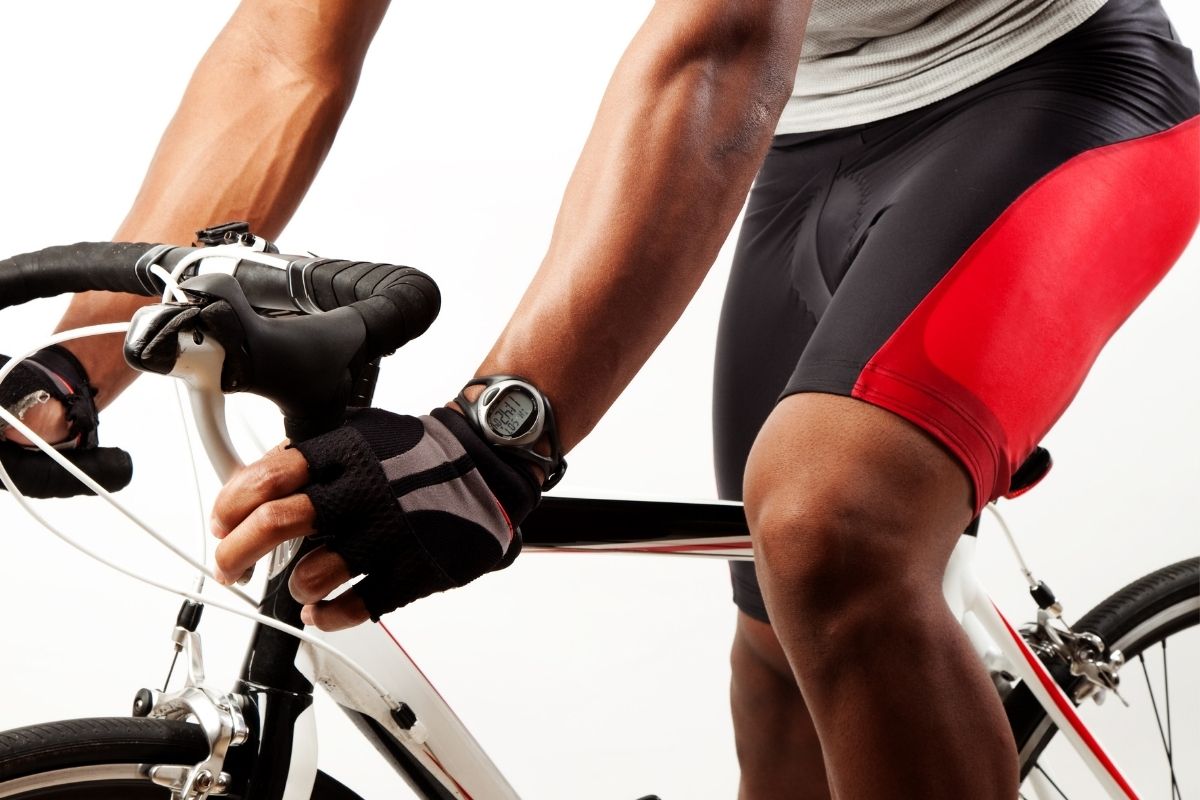
With the climate crisis threatening millions, more and more people are trying to find the most environmentally friendly ways to go about their lives, and cycling is one of the most effective ways to keep you and the planet healthy.
Many cities around the world have adapted to meet the needs of the growing population of cyclists, including Melbourne.
Did you know that the city of Melbourne has a cycling network that includes over 135km of on and off-road routes.
However, with that comes some important rules for cyclists that need to be followed in order to keep traffic flowing, but most importantly to keep you safe.
Before You Ride
Before you even get on your bike, you need to make sure that you have all of the right equipment and general knowledge to ensure that you’re going to be sensible and safe on the cycle paths and roads.
First of all, the law requires you to have working breaks, a bell, and lights.
Every bike must have at least one working brake, either front or back (though both is best), and a bell – or a horn, or something that makes noise to alert other cyclists, pedestrians, or drivers to your presence.
As well as that you must have several lights so that you can ride safely at night or in bad weather.
These lights include:
A white light on the front of your bike that is visible from 200 metres A red light on the back of your bike that is visible from 200 metres A red reflector on the back of your bike that is visible from 50 metres.
The Right Helmet
It is also required that you and any passengers that you might have on your bike are wearing a properly fitted and fastened helmet.
This helmet must be up to code and meet the Australian safety standard AS/NZS2063 – which can be found online.
There are some exceptional circumstances in which a doctor can authorise you to ride without a helmet for medical reasons.
Or if a religious headdress makes wearing a helmet impractical then you will not be required to wear one.
However, you do need to take into consideration your own safety when deciding not to wear a helmet for these reasons.
Safety Tips
The recommended safety tips that have been published by the Victoria government are as follows.
These are not necessarily legal requirements but are the best way to stay safe whilst cycling, especially when cycling on the road.
Wear the right helmet
Check that your brakes, lights, and bell/horn is working properly
Be alert – stay aware of your surroundings
Be predictable, use hand signals where appropriate and don’t make sudden movements
Ride at a sensible speed, don’t try to keep up with the cars
Use your bell where and when necessary
Ride responsibly – don’t ride drunk or high
Don’t listen to music or use your phone so that you don’t get distracted
Do not respond to road rage. You’re not going to win in a fight against a car
Essential Road Rules
There are just about as many rules for a cyclist to follow as there are for motorists, all intended to keep you, your passengers, and the people around you safe for your whole journey.
With this in mind, here are the essential rules that you need to follow in order to ride responsibly.
Safe Riding
When you’re riding your bike, make sure that you are facing forwards at all times and have at least one hand on the handlebars.
This way you will always have control and know what is coming in front of you.
You also need to make sure that there is a safe distance between you and any traffic that is in front of you so that there is enough space to allow you to stop safely and with enough time in case the car in front of you needs to stop suddenly.
You also need to be aware that “dinking”, the act of having someone sit on your crossbars or the carrier rack above your back wheel while you ride, is against the law.
A passenger may only sit on your bike if they are in a secure seat that is intended for a passenger.
Stay Safe In Heavy Traffic
Sometimes it can be difficult and stressful to ride during times of particularly heavy traffic, and no matter how much you may try and avoid rush hour, sometimes it’s impossible.
So, in order to stay safe, you will need to make sure that you’re wearing bright clothing, perhaps even a reflector shirt/vest, to make sure that everyone can see you clearly.
As well as your clothing you might want to turn your flashing lights on and be sure to stay out of drivers’ blind spots.
You will also want to ensure that you ride in a straight as much as possible and avoid moving in and out of traffic.
But if you do need to make turns or change lanes then you want to be using correct and clear hand signals wherever appropriate.
Sometimes in heavy traffic, passengers will decide to just leave the car or taxi that they were riding in.
However, this means that they need to open their doors suddenly and sometimes block cycle paths.
This could be particularly dangerous for you. Although it is an offence, some people still do it.
In order to avoid a collision, make sure you look out for people getting in and out of cars, but also ensure that you’re riding at a speed that will give you enough time to stop before you collide into a door.
Traffic Lights, Signals, and Signs
Just like a motorist, you need to obey every traffic light, signal, and sign that you see out on the road.
If there are no lights or signs at an intersection, then you must give way to any vehicle on your right hand that would cross your path.
Always ensure that you give way to pedestrians who are crossing on the road that you are turning into, and stop at yellow lights and arrows when it is safe to do so.
Speed
It is a legal requirement for you to obey the speed limit, and it is a serious offence to ride at a dangerous speed.
The speed limits are the maximum speed that you are allowed to ride your bike at, and sometimes to ride safely you will need to ride more slowly than the speed limit.
Most of the time, speed limits are signposted, but the general rule is that in build-up city areas, the speed limit is 50km per hour, in country areas the speed limit is up to 100km, and then near schools or shopping strips the speed limit is often around 40km per hour.
Overtaking
When you are riding on the road, you will be able to overtake a vehicle on the left or the right, so long as:
You can clearly see any approaching traffic You can overtake the vehicle safely
You must not overtake a vehicle if:
It is on your left, and it is turning left It is on your right and it is turning right It is on your right and it is performing a U-turn from the centre of the road.
Car Overtaking Or Passing Bikes
When a car is overtaking or passing a bike, the motorist must keep at least one metre clear in zones up to 60km per hour, and at least 1.5 metres if going more than 60kms per hour.
Where To Park Your Bike
There are loads of places around Melbourne for you to leave your bike and get on with your day, in fact, there are actually more than 2,700 bicycle hoops on the streets across the municipality.
You can find a map of all the possible locations here. Just be sure to bring your own bike lock.
Bottom Line
At the end of the day, it is important that you stay safe and follow the safety laws and regulations that have been put out by the city of Melbourne as well as the state of Victoria.
If you need to find more information, you can find a full document including all of the rules about riding your bike around Victoria here.
In Australia, biking is often the preferred mode of transport. Whether you’re popping into town, exploring the neighbourhood, or seeing the sights, taking a bike with you is a must.
This is why we decided to create Melbourne Bike Share. We wanted to make sure that every visitor to our grand city had the opportunity to explore it all on wheels.